Production Machinery
Industrial Equipment Built for Yield
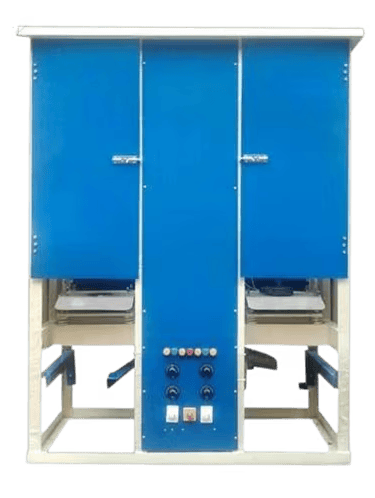
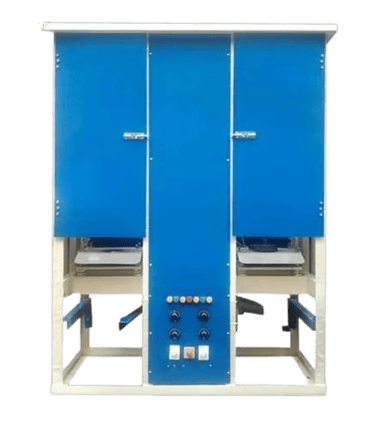
Double Die Setup (Bottom Center): The machine features two separate pressing stations (dies) working side-by-side. This allows the operator to produce two items simultaneously. You can use identical dies to maximize the production of one item, or two different sizes/types of molds (e.g., a dona bowl on one side and a flat plate on the other).
Protective Enclosure (Top Blue Cabinet): The upper mechanical and hydraulic/crank driving mechanisms are safely enclosed behind blue metal doors to prevent accidents and keep dust away from the gears.
Control Panel (Right Side): The integrated panel features:
Indicator Lights: To show power status and heating readiness.
Rotary Switches/Thermostats: To precisely control the temperature of the heaters embedded in the dies (essential for cleanly pressing and holding the shape of the paper).
Main Power Switch: For safely turning the unit on and off.
Heavy-Duty Frame: The white-painted iron structure provides stability, reducing vibrations while the dies are stamping out the paper plates.
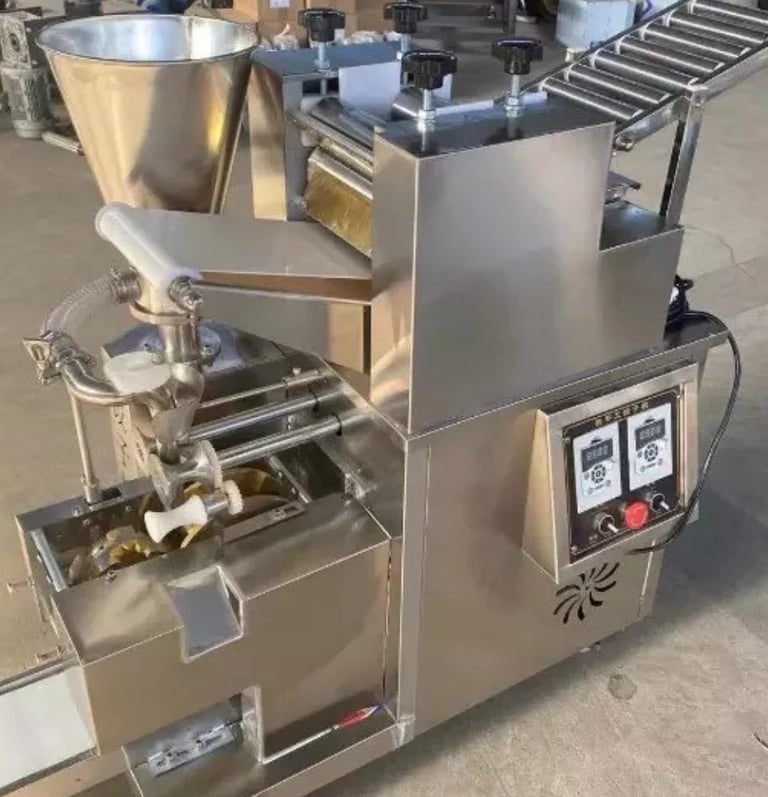
This is a commercial-grade Automatic Momo Making Machine (also widely used for making dumplings, samosas, gyoza, and spring rolls depending on the mold attached). It is constructed entirely from stainless steel, making it ideal for high-volume food businesses, restaurants, and catering services.
Key Components
Filling Hopper (Top Left): The large cone-shaped funnel where the prepared stuffing (vegetable, chicken, or meat mixture) is loaded.
Dough Roller & Feeder (Top Right): The section with the adjustable black knobs where the dough is placed, rolled into a consistent sheet, and fed into the forming mechanism.
Conveyor/Roller Ramp (Far Right): A metal roller track used to assist with feeding dough or moving components into place safely.
Forming & Cutting Area (Bottom Left): This houses the specific mold that shapes and seals the momos before they drop onto a small exit conveyor belt at the very bottom.
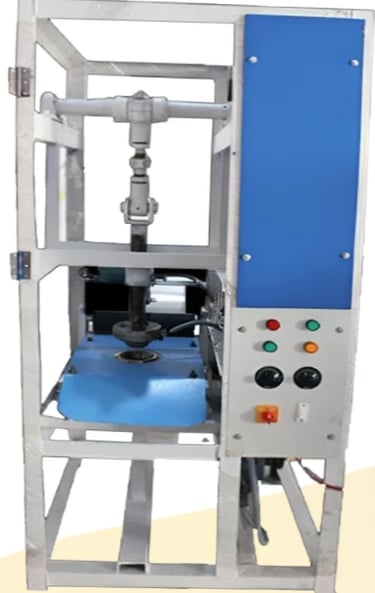
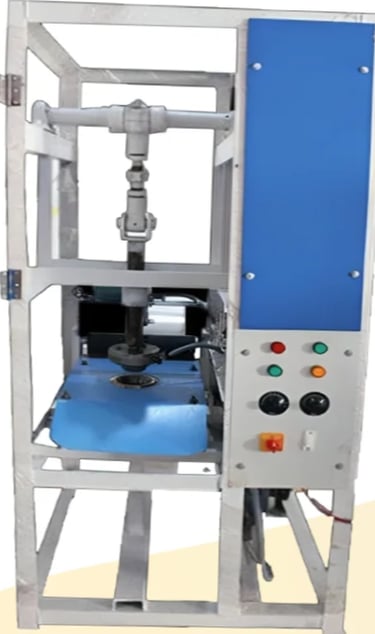
Single Die Setup (Bottom Left-Center): Unlike the larger double-die variants, this machine operates with a single mold (die) at its center. A vertical piston or crank shaft drives the upper heated mold down into the stationary lower mold.
Open-Frame Structure: The main body features a skeletal, white-painted iron frame, allowing for easy maintenance, monitoring of the moving parts, and smooth feeding of raw material from the back.
Drive Mechanism (Rear/Bottom): Hidden towards the back is the electric motor and gearbox/cam system that provides the mechanical force required to press and form the plates.
Key Benefits
Compact & Space-Saving: Its small footprint makes it easy to set up in a garage, small workshop, or even a spare room.
Cost-Effective Entry: Because it features a single die, it requires a much lower initial investment, making it perfect for entrepreneurs testing the local market.
Interchangeable Molds: Even though it only presses one item at a time, you can easily swap out the die to manufacture different items—ranging from 4-inch spice bowls to 12-inch dinner plates.
Low Power Consumption: Most single-die machines are built to run efficiently on standard single-phase household electricity.
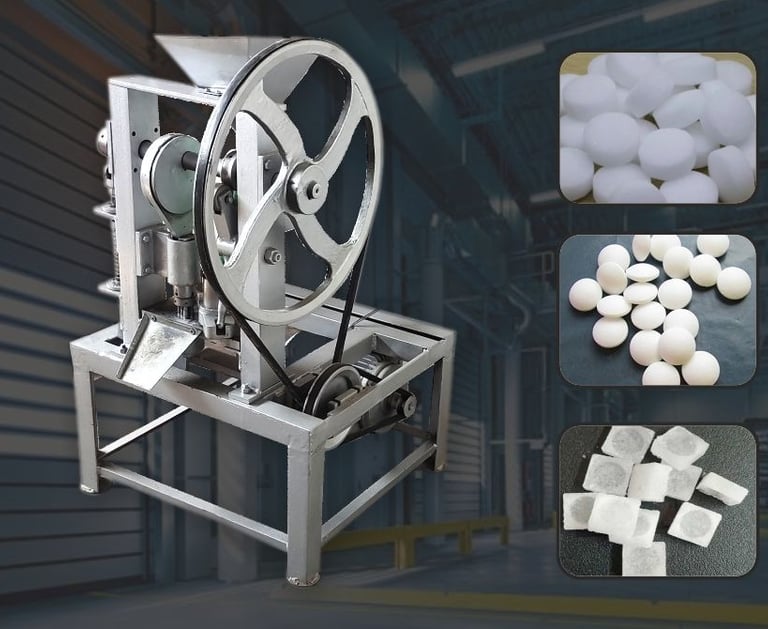
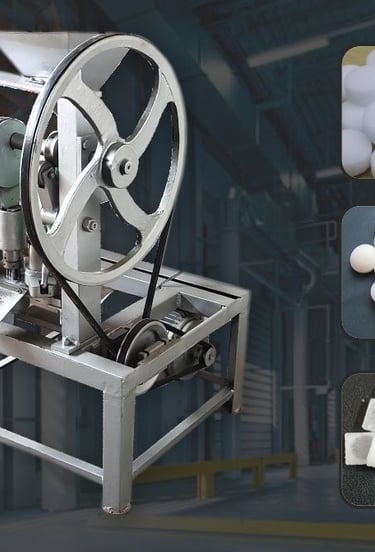
This is an industrial Camphor (Kapoor) Tablet Making Machine.
Key Components
Material Hopper (Top): The stainless steel funnel where loose camphor powder is loaded into the machine.
Mechanical Cam & Punch Press (Center): Uses a heavy eccentric cam mechanism to push a metal punch down into a die mold with massive force, binding the dry powder into a solid tablet without needing moisture.
Large Flywheel and V-Belt Drive: The large spoked silver wheel acts as a flywheel. It connects to a small electric motor mounted on the lower frame via a black rubber V-belt. This setup stores kinetic energy to provide consistent, heavy downward impacts.
Heavy-Duty Steel Base Frame: An unpainted or silver-coated metallic structural stand built to withstand heavy vibrations during the stamping process.
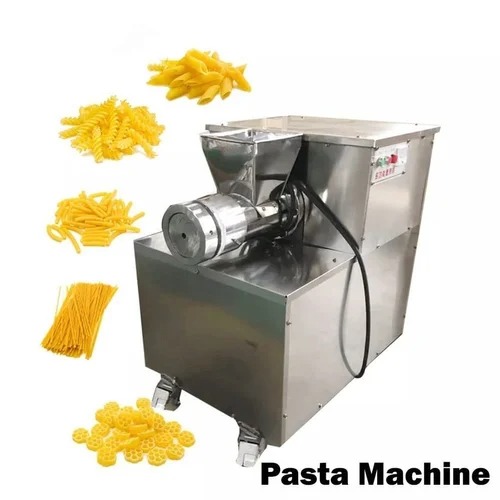
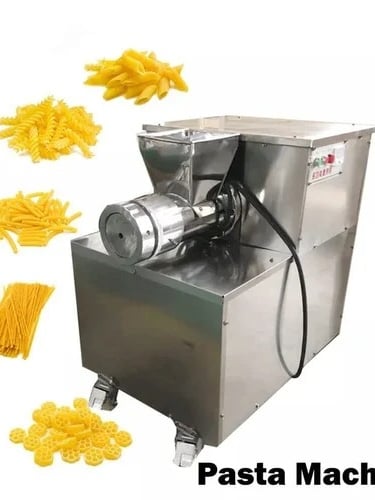
This is an industrial Pasta Making Machine.
Material: The machine features a heavy-duty, industrial-grade stainless steel construction, giving it a sleek, metallic finish.
Structure: It has a boxy, rectangular main body supported by caster wheels at the base, indicating that it is a mobile commercial or semi-industrial unit.
Components:
A top-loading hopper/funnel where raw ingredients or dough are likely fed into the system.
A prominent horizontal extrusion cylinder at the front where the pasta is pushed through a shaping die.
A control panel visible on the upper right side with buttons (including green and red switches) for operation.
A thick black power cord draped along the side of the machine.
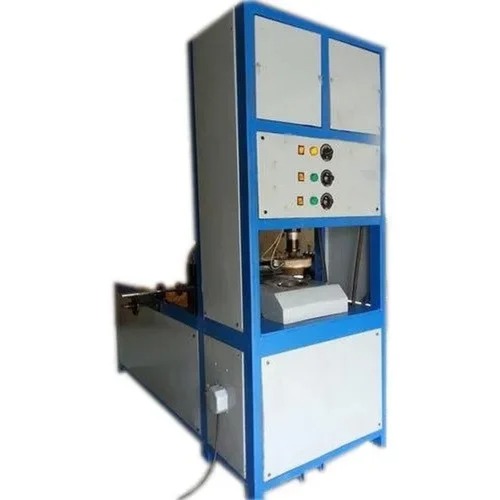
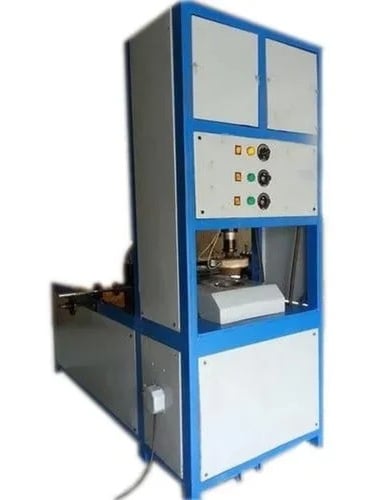
This is an industrial Thermocol Making Machine.
Structure and Color Scheme
Frame: The machine features a prominent, bright blue structural metal frame that outlines its rectangular shape.
Panels: Large, flat, off-white or light gray metal panels are set within the blue frame to enclose the internal machinery.
Layout: It is built with a tall vertical tower at the front and a lower horizontal extension stretching out to the left rear.
Front Control and Operation Tower
Upper Section: The top of the tower features two closed rectangular compartment doors.
Control Panel: Below these doors is a dedicated control console panel. It houses a vertical row of three black rotary dials or gauges alongside matching indicator lights and orange/green toggle switches to manage the machine's operations.
Working Press Area: In the middle of the tower is an open, accessible bay. Inside this bay, you can see a mechanical press or die assembly, which is the central mechanism used to mold and stamp out the plates.
Base Section: A solid, enclosed panel covers the bottom portion of the front tower to protect internal electrical or mechanical components. A small gray junction box with an attached grey wire is visible near the bottom left corner.
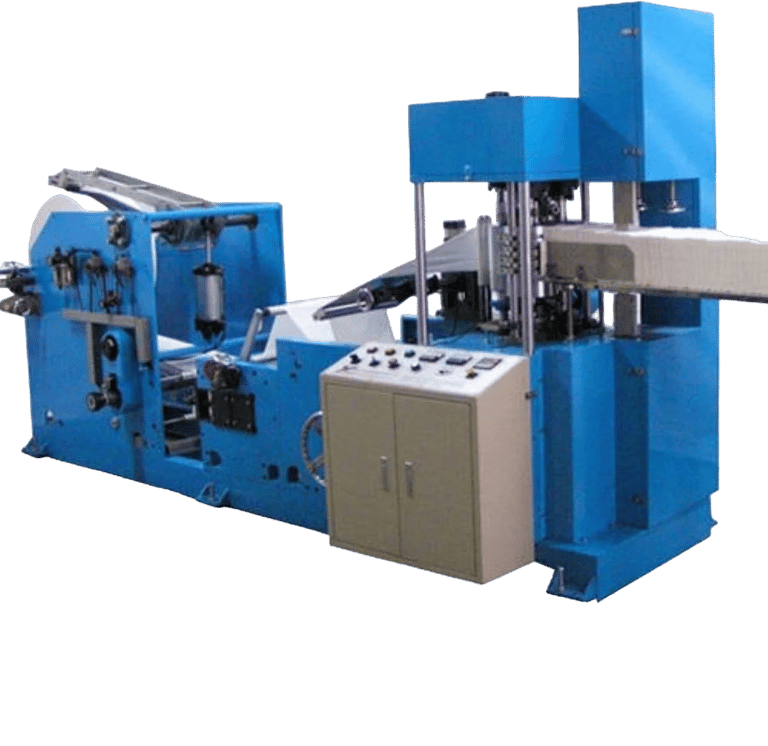
Structure and Build
Frame: The machine is built on an industrial-grade, heavy steel frame painted in a bright blue color. It has a long, horizontal configuration that moves paper through various stages of processing.
Component Sections: It features a backend section (left) for raw material unrolling, a middle transition section for embossing or folding, and a tall processing tower assembly (right).
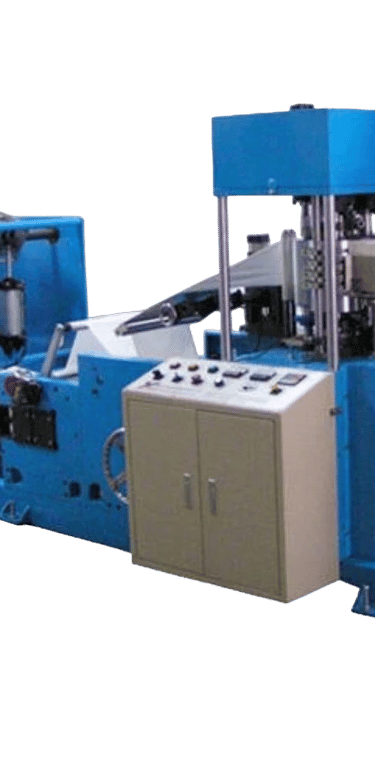
Control Console
Design: Positioned in the front-center is a prominent, beige/off-white electrical control cabinet featuring double doors with silver handles.
Interface: The top sloped panel of this console acts as the main operator interface, lined with multiple colored control buttons, indicator lights, and gauge displays to monitor machine performance, speed, and settings.
Processing & Output Mechanisms
Unwinding & Feed System: At the far left, the machine accommodates large parent rolls of paper. A system of rollers, tension bars, and a black pneumatic air cylinder guide the thin white paper web smoothly forward.
Folding and Press Tower: The paper is fed into a vertical press assembly housed under a blue block enclosure. This section utilizes vertical guide rods and mechanical components to crimp, fold, or cut the tissue.
Output Conveyor: On the far right, the completely processed and folded paper napkins/tissues are seen neatly stacked and continuously discharged horizontally along an output chute.
Machinery Catalog
High-Yield Production Units
Select the engineered foundation for your local enterprise. Each model features standardized components and verified pieces per hour outputs.
Plate Making Unit
Cup Forming Unit
Dona Making Unit
4,000
pieces per hour
3,600
pieces per hour
2,800
pieces per hour
Double-die automatic hydraulic press optimized for high-volume domestic supply. Built with heavy-duty steel plates for continuous operation.
High-speed single PE paper cup machine featuring automated stacking and precise temperature control sensors for zero-defect output.
Low-cost, high-yield single-die machine designed for regional micro-enterprises. Simple mechanical calibration ensures highly reliable daily production.
Calibrated Engineering Standards
100%
continuous operation
24 Hr
factory testing
Zero
manual calibration needed
Secure Your Production Unit
Contact our New Delhi engineering team for custom pricing, shipping timelines, and turnkey installation support for your new manufacturing enterprise.